At the end of the world, there is a road called „Ruta del fin del mundo“, which literally translates to „road of the end of the world“. It goes over thousands of kilometers to the southern end of the American continent and continues even after the last tip of the mainland to the island of Fireland, finally reaching the city of Ushuaia. And here, at the end of the „Ruta del fin del mundo“, there is one place that lies even beyond. It is the southernmost town of the world, Puerto Williams, on the Chilean island Navarino. Being there, you are so far south that you can suddenly imagine how Antarctica must smell.
It was at those latitudes that I got sick. At first, I had thought that the nausea came from the shaky boat ride across the Beagle Channel, but when I felt like I couldn’t get warm anymore, even though Mayra from the hostel had already loaded an overflowing amount of pellets to the oven, I realized that I had, in fact, a fever.
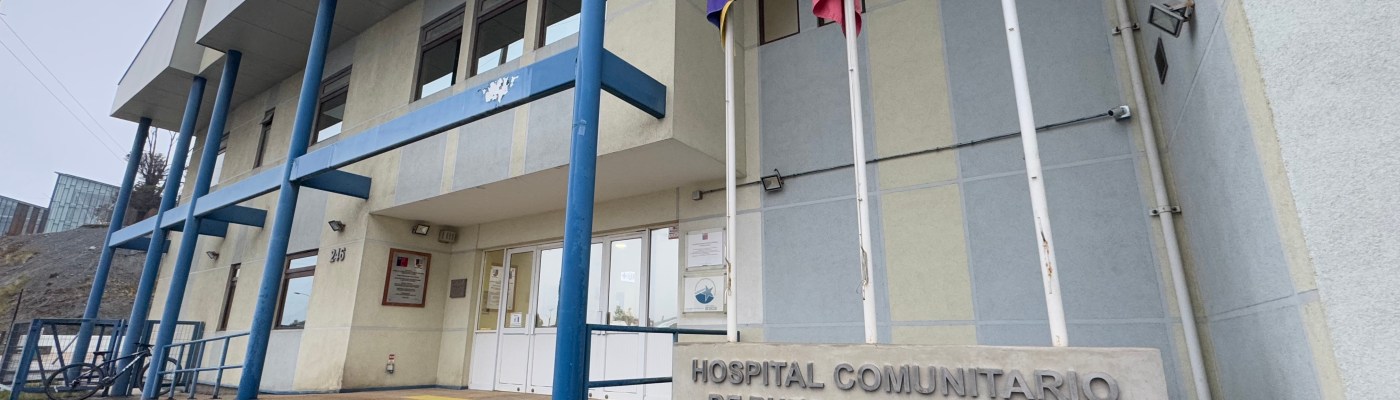
I had planned to have a look at the local hospital, though not this way. If I am honest, I had not even expected a hospital to exist at this lost place at the end of the world. I had thought a „posta“, like many other remote places are equipped with — a health post with maybe three rooms, one nurse, and a doctor — was already a high expectation. Apparently, I was ten years late for that. Puerto Williams might be the remotest hospital of the world, but it is definitely not the worst equipped, nor the shortest staffed. I was greeted by three nurses in preliminary teaching-mode, and even though I had already triaged (and diagnosed) myself at the reception, they upheld protocol. After an extensive anamnesis questionnaire, they came to the same conclusion as I had five minutes earlier.
It was the least urgent time I had entered a hospital as a patient, and it was the fastest I had been seen by a doctor.
Patricio* entered the room, looking stressed and serious, as it seems to be an universal requirement when working in the ER. He kept asking all the right questions and doing all the right exams in order to come to the same conclusion I had a few hours before. We also agreed on the treatment plan, and when I finally admitted to being a doctor myself, his whole stressed tension dropped, and in one second, his serious attitude was gone. He sighed in relief and started laughing. „Why did you let me talk so much?“
I did not even have to ask before Patricio offered to give me a tour of the hospital as soon as I felt better. And since IV drips are known to be magic in disguise, I was very happy to show up the next day. And even though he assured me it was fine, I still felt a slight pinch of guilt as Patricio came in on his day off to make his offer come true.
The Hospital
Puerto Williams was built as a military base for the Chilean Navy, and before there was a fully equipped hospital in Puerto Williams, there was only the naval health post: one bed, one doctor, and a boat to Punta Arenas in case of an emergency.
A lot has changed since. The hospital was built ten years ago, and the region of Magallanes has invested everything possible to make it look good.
And it did look good. I could see a comparatively big ER, including an fully equipped shock room, an automatic portable defibrillator (which they use about five times a year), the newest video laryngoscope, a new echocardiogram, and, quite importantly, a fully equipped hypothermia set (which they use regularly, since people tend to fall into the Beagle Channel). The OR seemed brand new, including a GE respirator and inhalative anaesthetics, and the hospitalization wards were more luxorious than the rooms I know from the rural hospital where I used to work in southern Germany. Even the outpatient rooms with offices for two doctors, physio therapists and social workers were generous. There was also space for dental consultation with a dentist working there from Monday to Friday.
It is very well-equipped in comprison to the rest of Chile – Patricio never gets tired of pointing this out in every room we walk into.
The laboratory, with all essential tests, the X-ray imaging, everything was there… except: „Those only work from monday to friday until 5 p.m. In the evenings and on the weekends, I don‘t have any diagnostics“, says Patricio. I stared at him, thinking there might be a language barrier. But, no – there is no personnel for those diagnostics at those times. And even during the weekdays, they don’t have a radiologist. The generalists interpret the images themselves, always – and they fully rely on their clinical exams.
„They put a lot of money into implementing and to setting it up. But to maintain and keep it working — that‘s where it goes wrong.“
So, yes, everything looks good, and everything you‘d theoretically need is there — but as all over the world, the government seems to have forgotten about the most essential resource: people. You need people skilled and routinely trained to use the fancy equipment. And it seems like forgetting about people is a global and systemic problem in health care administration: the people holding the system together come last. As I noted luxorious beds for the patients, I saw none for the night shift nurses, as they sleep on a tiny sofa in the kitchen.
The Doctors
So who are those brave souls taking care for the people at the end of the world? The hospital accounts of four doctors, all of them generalists, having recently graduated from university before coming here. They all come here mainly for one reason: to learn.
As many countries of the world struggle with a lack of doctors in rural areas, in the 1970s Chile had very few generalists and they were mostly living and working in cities. To fight that problem they made a law paying for the specialization of those who committed to move to rural areas for six years. This way they had more generalists in rural areas and they had more specialists in the end as well.
And the more remote, the more points you get in order to start specialising earlier. Patricio chose Puerto Williams and nothing is more remote than that and also, places like this don‘t exist anymore in Chile. There are only a few places left where the work of generalist doctors is still being conserved the way it is in Puerto Williams, since the medical field and even working in rural areas is getting more and more specialised.
„Learning from everything and solve with little.“
The lack of resources and options requires the doctors to be even more thorough in their daily work than anywhere else in order to not miss anything they might regret later. Everybody coming to the ER gets a full body exam. You come for complaints of your shoulder? They‘ll look in your mouth. Come for a belly ache? They‘ll palpate your lymph nodes.
Generally, one of the four doctors is working in the ER, while two are in the outpaitent consultancies, and one might be on his/her day off. The team spirit is very important, there is no place for hierarchy and if there is a real emergency, all four doctors come to the hospital and help each other out. Sometimes, if all the others are on vacation or not in town for other reasons, one of them is left alone and they have to work up until four or five days on their own, consecutively. I can only imagine the mental load that comes with those shifts, The knowledge and experience acquired in those shifts can come at a high price.
„You learn from your mistakes.“
So, yes, the learning curve in a place like this is steep. And I can see, while talking to Patricio, that he‘s had to learn many things on his own, things he didn‘t learn at university. In Europe, we learn a lot with mannequins and simulations, actors even, or with case studies. Here in Chile, students learn mainly with patients, and, as we know all around the world, you learn the most from your mistakes. As generalist doctors in Puerto Williams, they learn to do everything by doing, from doing echocardiograms to intubation, reanimation, and and to emergencies in obstetrics. The advantage of being this remote and far from any specialized centre is they get sent to a month-long training to do cesarean sections, a training you don‘t get if you work somewhere else as a generalist.
So, yes. Being a generalist this far away from the rest of the world, requires you to work a lot but also to learn a lot. Other than I thought, it is less about improvising, but more about doing stuff that you are not trained to do.
The OR is fully equipped to do a cesarean section. And again, it is not the material resources that are missing. The team is far from being big enough, let alone routinised to carry it out like a standard procedure. There is one midwife in Williams, but she’s trained to do the routine pregnancy support and not especially trained for emergencies. When women reach the 34th week of their pregnancy, they are legally obliged to move to an area close to an obstetrics centre. In the region of Magallanes, this means they have to move to either Punta Arenas or Puerto Natales.
The Patients, Population and Common Problems
The population of Puerto Williams is rather young. Many young adults work in fishing companies or in the Navy, which constitutes about half of the population and they bring their families. Only about 60 elderly people live on the island, and some move closer to Punta Arenas when they get sick. Thus, elsewhere common diseases like heart failure, COPD, or other chronic diseases are rare.
Mental health, though, is a major concern in Puerto Williams. There are a significant amount of emergencies, such as intoxications, suicide attempts, severe depression. Especially in winter, when the sun doesn’t rise until 10 a.m. and sets by 4 p.m., people become deeply affected by the darkness, and depression is common. As in many other countries, the national health system is overwhelmed, and psychiatric resources are limited. Serious cases have to be transferred to Punta Arenas, but beds are scarce there too, and patients sometimes wait here for several days. Still, in Magallanes, waiting times for non-urgent psychiatric care are shorter than in central Chile, simply because fewer people live here.
The Emergencies versus Resourcefulness
„So what do you do with people and chest pain?“, I ask. They have 10 samples of fast troponin testing. But since financial resources are scarce, they have to choose wisely on whom to use it on. And they have no test for D-dimers, a the tests routinely used for screening for pulmonary embolism, a test I personally had used sometimes up to five times a day in the ER. „We observe them, do an ECG, an Echo and an X-ray, and if they get worse we send them to Punta Arenas.“, Patricio tells me. But even then, there are restrictions: It costs half a million pesos (roughly 450 Euros) to transfer a person to Punta Arenas, and four million (about 3,500 Euros) if it is an emergency.
And then there are the cases where you cannot transfer a patient, either because the weather doesn’t allow a safe journey or because the five-hour transferral would be to time-consuming in a critical case. And more often than not, patients do not want to get transferred. There are fishermen that come here for one day to fish in the south and if they have a (in their eyes) rather small complaint, they prefer to not be sent to Punta Arenas, they want the doctors of Puerto Williams to solve the problem and will not leave the hospital until they are attended to — even if it might be something critical that would need the attention of a specialist.
And sometimes some problems solve themselves:
“There was this one time—a fisherman on a remote island down south. He had chest pain, a possible heart attack. When it’s a maritime rescue, the Navy has to step in. So they went out, but the island was completely wild—no dock, no path. When they finally found him, they had no lab, no ECG—nothing. Just a smartwatch. And he weighed 150 kilos, no way to get him on a stretcher. So the naval doctor told him that he was going to have to walk. Five kilometers. In the snow. With suspected heart attack.
When he finally made it to our hospital, we looked at him and figured he had just conducted his own stress test.”
Evacuating people this far away can be a challenge. There is one ambulance, but since there are not many roads it only takes you so far. The marines do have a helicopter so sometimes they can rescue people fast from the mountains. But when the wind (which is quite common) obstructs the rescue, people from the area, who know the mountains well, have to go and get the injured by horse.
The Education and Politics That Shape (Chile’s) Healthcare
Like many places in the world, Chile’s healthcare system is under financial strain. All public hospitals are in debt, and the system itself keeps sinking further—something that might be bound to eventually collapse. The upside is that at least patients don’t pay out of pocket.
Politically, healthcare swings between two extremes. Left-wing governments invest in public hospitals, while right-wing ones push for more public-private integration and more privatisation, paying private clinics to take in public patients. Hospitals and health infrastructure are constructed without people to run them or manage them, not generating money. And then, four years later — since Chile tends to- change governments every four years — public funds are diverted to private institutions, often with little return. Like this, no long-term reform can last.
I ask Patricio what single change he believes would make the biggest difference.
“Of course, the health system itself is broken. But the underlying problem is the lack of education. In Chile, if you have money, you get a good education. If you don’t, you get none.”
And this lack of education leads to health problems — many don’t care for their health simply because they were never taught to. In Chile, chronic conditions like heart failure and COPD are widespread, driven by poor, occidental diet a lot like in the US — ultra-processed foods, fast food culture, and traditional heavy meats, especially in cold regions like Magallanes. In Puerto Williams, people don’t care for their health and alimentation, but before their health deteriorates completely they leave the island, anyway. Vaccination rates are generally high in Chile, but misinformation is spreading fast and without proper education, people don‘t have the necessary tools to fact check. In rural areas, TikTok conspiracy theories have led to growing vaccine hesitancy. Hearing all this at the literal end of the world sounds so familiar as if we were standing in the heart of Europe. Health education is not something that is present in everyday life, even though all of us have a body and mind to take care of.
Patricio’s answer to my question surprised me. Rather than changing something in the system that is broken, he wishes to change people so they won’t need that broken system. And he is right. I am certain almost every single doctor I have met has gone through the five phases of grief in their job when we start to realize when and where health care fails. We get tired, we get broken and frustrated and we break our teeth wanting to change until we finally realize it apparently cannot be changed. The only thing we can change is our own actions, how we do our work, how we interact and inform people. And I hope that this still makes a difference for some.
So if you managed to read until here, thank you! Let me know how would you have imagined a hospital at the end of the world? What surprised you most?
*Name changed
 Roaming Medicine